If you’ve been wondering whether it’s too late for braces, the short answer is no. Adult orthodontics is more common than many people think. More adults than ever are choosing to improve their smiles, and patients in their 30s, 40s, 50s and well beyond are straightening their teeth. At Somerset Orthodontic Specialists, we help adults across Somerset County find treatment options that fit modern lives, careers and smile goals.
Is It Too Late for Braces as an Adult?
No, there is no upper age limit for orthodontic treatment. Teeth can be moved safely at any age as long as the gums, bone and surrounding tissues are healthy. What matters isn’t your birthdate. It’s the condition of your mouth.
Here’s why. The bone that holds your teeth in place is living tissue that remodels throughout your life. When gentle, controlled pressure is applied, bone cells break down on one side of the tooth and rebuild on the other. That biology works at 15 and at 75.
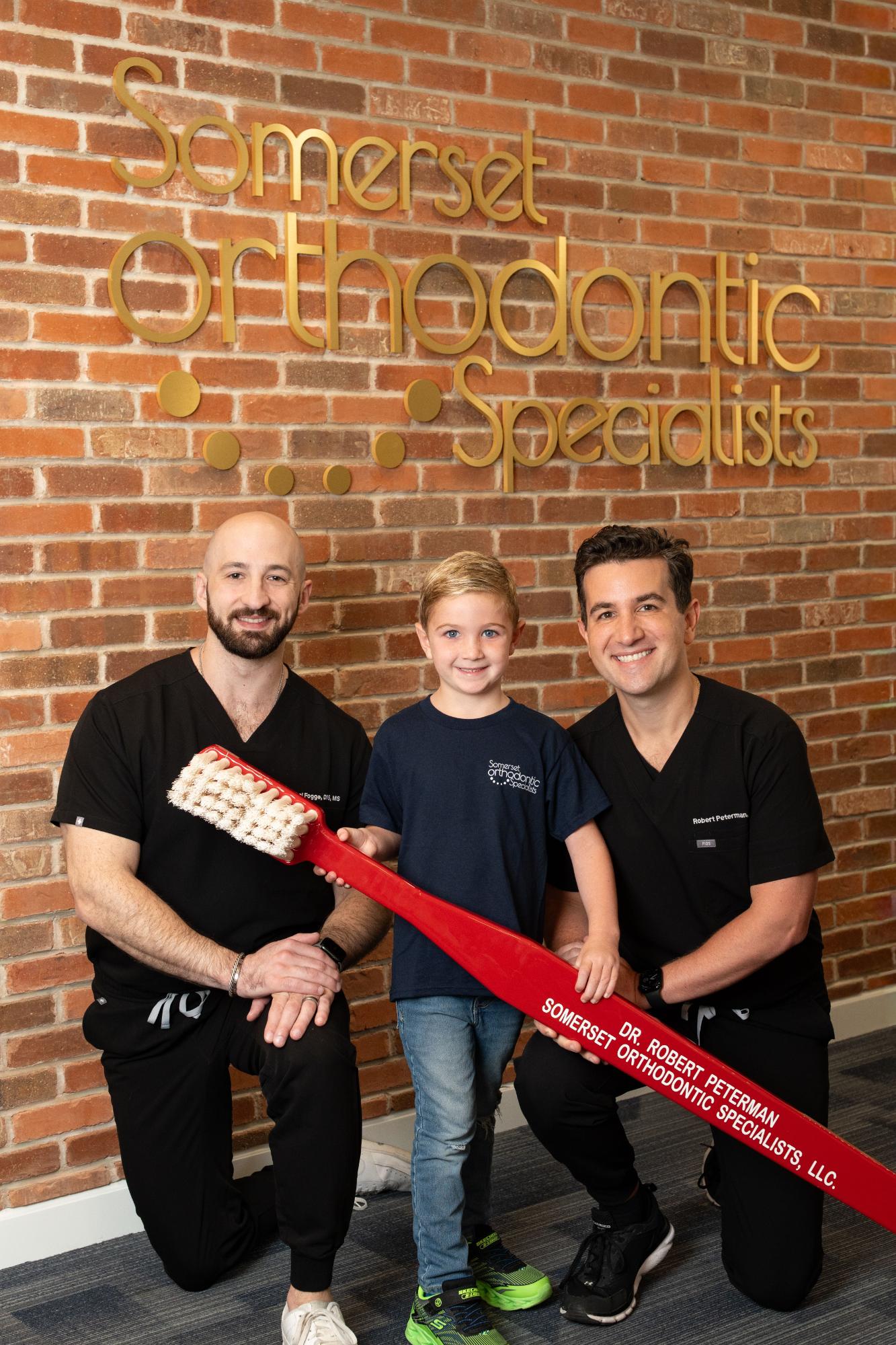
Many adults seek treatment because their teeth shifted after childhood braces (a common issue called relapse). Others deal with crowding that worsened over time, bite problems causing jaw discomfort or simply want to feel more confident when they smile. Whatever the reason, Dr. Robert Peterman and Dr. Michael Fogge, both board-certified orthodontists, can help you decide what’s possible.
How Adult Orthodontic Treatment Works
Adult orthodontic treatment at Somerset Orthodontic Specialists follows a clear, step-by-step process built around your schedule and goals. From your first visit to your final retainer check, each stage is planned to keep treatment on track.
Here’s what to expect:
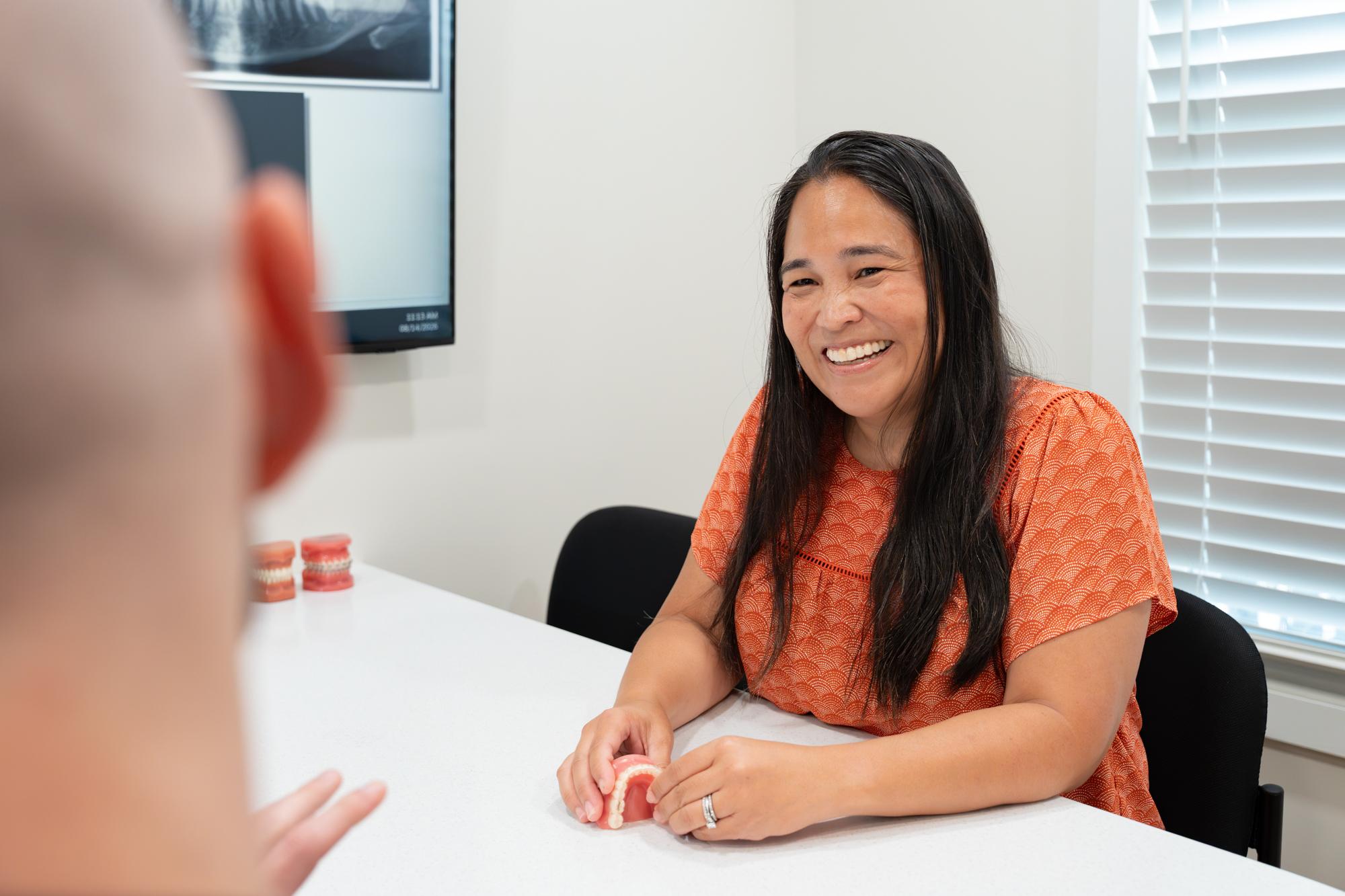
- Free consultation and digital records. Start with a free in-office consultation or a free virtual consultation. We’ll take digital scans, photos and X-rays to understand your bite and tooth position.
- Customized treatment plan. Dr. Peterman or Dr. Fogge will walk you through your options and timeline. You’ll see exactly what’s recommended and why.
- Planning around existing dental work. If you have crowns, bridges, veneers or implants, your treatment plan is built around them so your existing dental work is protected throughout treatment.
- Active treatment. Whether you choose braces or clear aligners, you’ll come in for regular visits for adjustments or new aligner sets. Our team keeps appointments efficient so you’re in and out.
- Retention phase. Once your teeth are in their new positions, retainers hold them there. We design and 3D print retainers in-house, which means faster turnaround if you ever need a replacement.
Adult treatment often runs 12 to 24 months, depending on how complex your case is. Minor spacing or crowding may finish faster. Full bite correction can take longer. Your treatment plan will give you a realistic estimate from the start.
Benefits of Straightening Your Teeth as an Adult
Straight teeth do more than look good. They protect your long-term oral health, make daily care easier and often improve how your jaw feels. For many adults, orthodontic treatment is as much about health as it is about appearance.
Here are the benefits adults most often experience:
- Easier daily cleaning. Straight, properly aligned teeth are simpler to brush and floss. That reduces plaque buildup, lowers cavity risk and helps protect against gum disease over time.
- Relief from bite-related tension. A corrected bite can ease TMJ discomfort, jaw fatigue and tension headaches that come from clenching or an uneven bite.
- Protection against tooth wear. When your bite distributes force evenly, you’re less likely to chip, crack or wear down teeth prematurely.
- Better chewing and clearer speech. Some patients notice they chew more comfortably, and certain speech issues tied to tooth position can improve.
- A confidence boost. Many adults find they smile more freely in meetings, photos and social settings once treatment is finished. It’s a quiet shift, but it matters.
- Preventive value. Correcting alignment now can help you avoid more involved restorative work later, such as crowns on worn teeth or periodontal treatment for inflamed gums.
Adult Treatment Options: Metal Braces vs. Clear Braces vs. Invisalign
Adults today have more choices than ever. The three main options we offer are traditional metal braces, clear ceramic braces and Invisalign clear aligners. Each works well for different cases and lifestyles.
Metal braces remain the most versatile option. They can handle the full range of corrections, from simple alignment concerns to complex cases involving rotation or significant crowding. Today’s metal brackets are smaller and more comfortable than earlier generations.
Clear ceramic braces work the same way as metal braces but use tooth-colored brackets that blend in. They’re a popular choice for adults who want a fixed solution that’s less noticeable in professional settings.
Invisalign and clear aligners are nearly invisible, removable trays worn 20 to 22 hours a day. You take them out to eat and brush, which many adults appreciate. Somerset Orthodontic Specialists also offers custom in-house aligners, so Dr. Peterman and Dr. Fogge can recommend the aligner option that fits your case best.
| Feature | Metal Braces | Clear Ceramic Braces | Invisalign / Clear Aligners |
|---|---|---|---|
| Visibility | Most visible | Discreet | Nearly invisible |
| Removable | No | No | Yes |
| Case complexity | Simple to complex | Simple to complex | Many common cases |
| Food restrictions | Yes | Yes | None (remove to eat) |
A quick word about mail-order aligner companies. Those services skip in-person exams, X-rays and ongoing supervision by a specialist, which can lead to bite problems or teeth that don’t move as planned. Working with board-certified orthodontists means your treatment is monitored at every stage.
The right option depends on your bite, your lifestyle and your preference. We’ll help you weigh the trade-offs during your free consultation.
Am I a Good Candidate for Adult Braces?
Most adults are good candidates for orthodontic treatment. The key factors aren’t age but the health of your teeth, gums and supporting bone. If something needs attention first, it gets addressed before treatment starts.
Here’s what makes someone a strong candidate:
- Healthy gums. Active gum disease needs to be treated before braces or aligners begin. Once your gums are stable, treatment can usually proceed.
- Adequate bone support. Enough bone must be present to anchor the teeth as they move. We’ll check this with digital imaging during your consultation.
- Existing dental work is manageable. Crowns, bridges, veneers and implants aren’t disqualifiers. They’re planned around. Implants don’t move, so treatment is designed with them in place.
- Missing teeth can be addressed. Treatment can close space where a tooth is missing or create room for a future implant.
- No upper age limit. If your teeth and gums are healthy, age alone won’t rule you out.
- Second opinions are worth getting. If another provider told you that you weren’t a candidate, it may be worth a fresh look. Technology and techniques have changed.
Dr. Peterman and Dr. Fogge can tell you quickly whether treatment makes sense for your situation.
Frequently Asked Questions About Adult Braces
What disqualifies you from getting braces?
Very few conditions permanently rule out braces. The most common issues that need to be addressed first are active gum disease and severe tooth decay. Once those are treated and stable, orthodontic treatment can usually begin. Uncontrolled medical conditions affecting bone healing may also require coordination with your physician.
Is 40 or 50 too late for braces?
Not at all. Adults in their 40s, 50s, 60s and beyond can be good candidates. Healthy teeth and gums matter far more than age. Many adults are surprised at how comfortable and discreet modern treatment has become, especially with options like Invisalign and clear ceramic braces.
Do braces hurt more for adults?
You may feel mild soreness after your braces are placed or after adjustments, and the same goes for new aligner trays. The discomfort is usually short-lived, lasting a day or two, and most patients manage it with over-the-counter pain relievers. It varies from person to person, and most adults find it very manageable.
Will I need a retainer after treatment?
Yes. Retainers keep your teeth in their new positions, since teeth naturally want to shift over time. Most patients wear their retainers full-time for about a year after treatment, then at night for the long term. We often tell patients: night time for a lifetime.
Can I get braces with crowns or implants?
Yes. Teeth with crowns, bridges or veneers can be moved with braces or aligners, though brackets or attachments may be bonded differently. Implants are fixed in the bone and don’t move, so your treatment plan is designed around them.
How long does adult treatment take?
Adult treatment often takes between 12 and 24 months. Simpler cases, like minor crowding or a small gap, can finish in less time. Complex bite corrections may run longer. During your free consultation, you’ll get a realistic timeline based on your specific case.
Ready to Take the First Step?
If you’ve been thinking about straightening your teeth, there’s no better time than now. Somerset Orthodontic Specialists welcomes adult patients at all three of our offices in Somerville at 199 West High Street, Hillsborough at 44 New Amwell Road and Montgomery at 378 Route 518, Suite B in Skillman.
Call (908) 526-0039 or start with a free consultation online. We’d love to help you take the first step toward a healthier, more confident smile.